
Enhancing Charge Acceptance of Lead Acid Battery Using Graphene-Infused Grid
DOI:
https://doi.org/10.56532/mjsat.v5i4.503Keywords:
Graphene, Lead Acid Battery, Positive Grid, Charge Acceptance, Electrochemical AnalysisAbstract
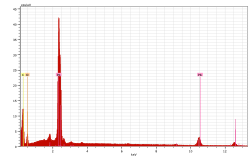
This paper presents a solution to improve the charge acceptance rate, enhancing life cycle and improving efficiency of lead acid battery by making lead Graphene composite for positive grid. This study introduced varying amounts of Graphene by powder metallurgy techniques into lead using powder metallurgy techniques, with lead serving as the as the grid material. An allotropic form of carbon, Graphene possesses superconductive qualities and primarily prevents corrosion and lowers the resistance between sulphuric acid and spongy lead. It does not take part in the process. This study follows an experimental approach to achieve the aim of improvement in the lead acid battery. A series of composites specimens were fabricated in different composition. A series of tests performed, include Energy Dispersive X-ray Spectrometer (EDS), Scanning Electron Microscopy (SEM), Microstructure, Electrical Resistivity, Electrical Conductivity, Charge Potential, Impedance Spectroscopy, Corrosion, Cyclic Voltammetry (CV) and X-ray Diffraction (XRD). Results revealed that the sample with 1.5% graphene exhibited optimal performance. Compared to pure lead grids, electrical conductivity improved by 13.3%, and electrical resistance decreased significantly. Corrosion analysis showed a notable reduction in corrosion rate, particularly in the 1.5% graphene sample, due to uniform granular bonding observed in SEM images. CV curves of this sample also demonstrated enhanced redox behaviour and current density, indicating better charge retention. This study analyses the results and compares those results with the spongy lead results which are being used in normal lead acid batteries as positive grid. In this study, it is noted that notable improvements in the lead acid battery were achieved by using the lead Graphene composite.
References
L. A. Yolshina, V. Y. Kudyakov, and V. G. Zyryanov, "A lead–film electrode on an aluminium substrate to serve as a lead–acid battery plate," Journal of Power Sources, vol. 78, no. 1–2, pp. 84–87, 1999. doi: https://doi.org/10.1016/S0378-7753(99)00016-6
L. A. Yolshina, V. Y. Kudyakov, and V. G. Zyryanov, "Development of an electrode for lead-acid batteries possessing a high electrochemical utilization factor and invariable cycling characteristics," Journal of Power Sources, vol. 65, no. 1–2, pp. 71–76, 1997 doi: https://doi.org/10.1016/S0378-7753(97)02469-5
E. Ebner, D. Burow, J. Panke, A. Börger, A. Feldhoff, P. Atanassova, J. Valenciano, M. Wark, and E. Rühl, “Carbon blacks for lead-acid batteries in micro-hybrid applications–Studied by transmission electron microscopy and Raman spectroscopy,” J. Power Sources, vol. 222, pp. 554–560, 2013. doi: https://doi.org/10.1016/J.JPOWSOUR.2012.08.089
J. Xiang, P. Ding, H. Zhang, X. Wu, J. Chen, and Y. Yang, "Beneficial effects of activated carbon additives on the performance of negative lead-acid battery electrode for high-rate partial-state-of-charge operation," J. Power Sources, vol. 241, pp. 150–158, 2013 doi: https://doi.org/10.1016/j.jpowsour.2013.04.106
Y. I. Jang, N. J. Dudney, T. N. Tiegs, and J. W. Klett, "Evaluation of the electrochemical stability of graphite foams as current collectors for lead acid batteries," J. Power Sources, vol. 161, no. 2, pp. 1392–1399, Oct. 2006. doi: https://doi.org/10.1016/j.jpowsour.2006.04.124
A. Czerwiński, S. Obrębowski, and Z. Rogulski, "New high-energy lead-acid battery with reticulated vitreous carbon as a carrier and current collector," J. Power Sources, vol. 198, pp. 378–382, 2012. doi: https://doi.org/10.1016/j.matpr.2016.06.013
L. W. Ma, B. Z. Chen, Y. Chen, and Y. Yuan, "Pitch-based carbon foam electrodeposited with lead as positive current collectors for lead acid batteries," J. Appl. Electrochem., vol. 39, no. 9, pp. 1609–1615, 2009. doi: https://doi.org/10.1007/s10800-009-9852-z
P. T. Moseley, “Consequences of including carbon in the negative plates of valve-regulated lead–acid batteries exposed to high-rate partial-state-of-charge operation,” J. Power Sources, vol. 191, no. 1, pp. 134–138, 2009. doi: https://doi.org/10.1016/j.jpowsour.2008.08.084
P. T. Moseley, R. F. Nelson, and A. F. Hollenkamp, "The role of carbon in valve-regulated lead–acid battery technology," J. Power Sources, vol. 157, no. 1, pp. 3–10, Jun. 2006. doi: https://doi.org/10.1016/j.jpowsour.2006.02.031
K. R. Bullock, "Carbon reactions and effects on valve-regulated lead-acid (VRLA) battery cycle life in high-rate, partial state-of-charge cycling," J. Power Sources, vol. 195, no. 14, pp. 4513–4519, 2010. doi: https://doi.org/10.1016/j.jpowsour.2009.10.027
P. Simon and Y. Gogotsi, "Materials for electrochemical capacitors," Nanoscience and Technology: A Collection of Reviews from Nature Journals, pp. 320–329, 2010. doi: https://doi.org/10.1038/nmat2297
D. Pavlov and P. Nikolov, "Capacitive carbon and electrochemical lead electrode systems at the negative plates of lead–acid batteries and elementary processes on cycling," J. Power Sources, vol. 242, pp. 380–399, 2013. doi: https://doi.org/10.1016/j.jpowsour.2013.05.065
Yolshina, L.A., Yolshina, V.A., Yolshina, A.N. and Plaksin, S.V., 2015. Novel lead-graphene and lead-graphite metallic composite materials for possible applications as positive electrode grid in lead-acid battery. Journal of Power Sources, 278, pp.87-97. doi: https://doi.org/10.1016/j.jpowsour.2014.12.036
Downloads
Published
Issue
Section
License
Copyright (c) 2025 Shoukat Ali Noonari, Sagheer Ahmed lund, Maria Panhwar, Tanweer Hussain Phulpoto, Amna Hafeez Rajput, Aftab Ahmed Khuhro

This work is licensed under a Creative Commons Attribution-NonCommercial 4.0 International License.

